


01 Sep The Surprising History of the Beanbag: FROM SACCO TO SOO SANTAÏ
The Surprising History of the Beanbag: From Avant-Garde Art to Floating Luxury
When you sink into a soft, oversized beanbag after a long day, you are relaxing on a piece of furniture with a surprising past. Long before they became popular in casual living rooms and luxury resorts, beanbags were born. In fact, they emerged from a radical 1960s Italian design movement. This movement aimed to completely change traditional interior design.
Let us take a quick journey through time. We will discover how a simple sack of beads conquered the world. Furthermore, we will see how modern innovators reimagined it for the water.
1. The Italian Avant-Garde: Birth of the Sacco (1968)
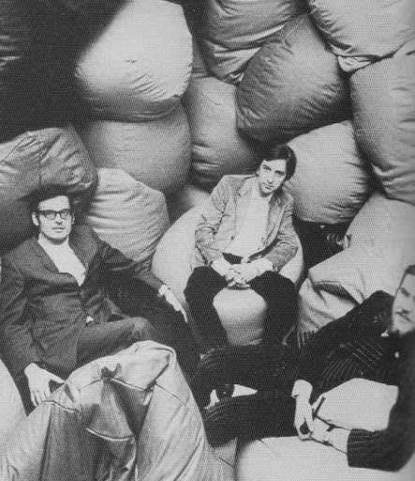
The story of the modern beanbag starts in Turin, Italy, in 1968. Three visionary designers—Piero Gatti, Cesare Paolini, and Franco Teodoro—wanted to create a unique chair. Specifically, they broke the strict rules of rigid, formal mid-century furniture.
Their creation was the Sacco, which translates to “sack.” Instead of a wooden frame, it used a pear-shaped fabric shell. Additionally, it was filled loosely with expanded polystyrene beads.
Crucially, the design had no rigid structure. Therefore, the chair adapted entirely to the body of the user. It was whimsical, informal, and designed for trendy youth. Soon enough, the Sacco chair became a global sensation.
2. The 1970s and 80s Pop Culture Boom
By the 1970s and 1980s, the bean bag had crossed oceans and exploded in popularity as a comfortable, stylish alternative to traditional seating. Fueled by the era’s love for bold colors and relaxed living, these cushiony seats were a must-have accessory for funky college dorm rooms and chic living spaces alike.
Pop culture cemented its iconic status during this era—most memorably immortalized on screen in classic cinema like The Breakfast Club. The counterculture movement left its mark with bold, unconventional shapes, and the bean bag craze reached a peak where everyone was searching for that perfect, squishy throne to sink into.
3. The 90s Slump and Ultimate Rebound
By the 1990s, consumer tastes changed dramatically. People preferred a sleek, minimalist aesthetic. Suddenly, mainstream designers viewed the beanbag as clunky, outdated, and messy. As a result, sales dropped significantly.
However, nostalgia is powerful. As people began craving casual comfort again, the beanbag made a massive comeback. Manufacturers used premium fabrics like velvet, microsuede, and faux fur. This evolution ultimately proved that the beanbag was a timeless classic.
4. Modern Innovation: Entering the Era of the Floating Beanbag
Today, beanbags have outgrown their indoor reputation. As outdoor living spaces evolved, manufacturers had to rethink their materials. Enter one of the most exciting recent trends: the floating beanbag.
Traditional beanbags would sink or waterlog instantly. However, modern engineering introduced marine-grade fabrics and quick-drying mesh panels. Moreover, they used buoyant, water-resistant fillings. Because of this, the ultimate relaxation seat moved from the living room floor straight onto the swimming pool.

5. Redefining Relaxation: The Innovation of Soo Santai
Taking this aquatic and outdoor evolution to the next level, brands like Soo Santai Since 2009 have redefined what a beanbag can be through high-end, luxury design. Specializing in exceptional comfort for tropical and upscale environments, Soo Santai has mastered the art of merging high-performance durability with effortless aesthetic appeal.
Iconic models like the Big Mama Floating and Daddy Cool showcase how far the humble beanbag has come. Engineered specifically to withstand water, sun, and rigorous outdoor use while maintaining a plush, cloud-like feel, these floating bean bags allow loungers to drift seamlessly from the patio straight into the water. By transforming a casual indoor staple into a sophisticated piece of resort-style luxury furniture, brands like Soo Santai prove that the evolution of comfort has no limits.
From its artistic roots in 1960s Italy to floating effortlessly on a sparkling pool, the beanbag has officially solidified its place as a timeless furniture icon.
What’s your ultimate relaxation setup—a classic fireside lounger or a floating beanbag on a warm sunny afternoon?
No Comments